Complete Process Flow
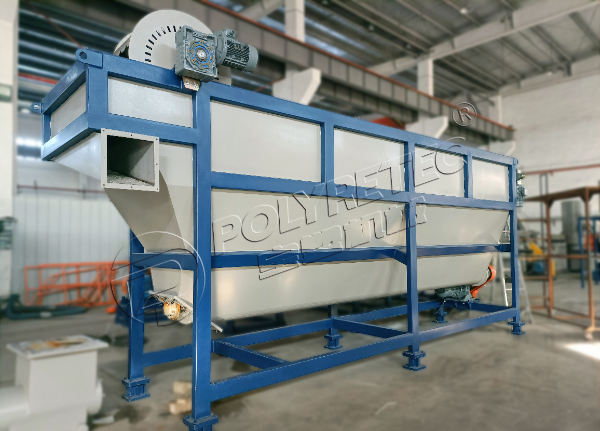
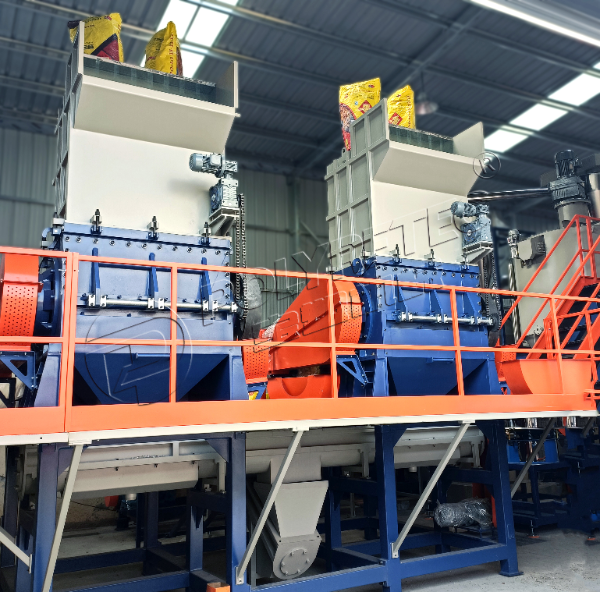
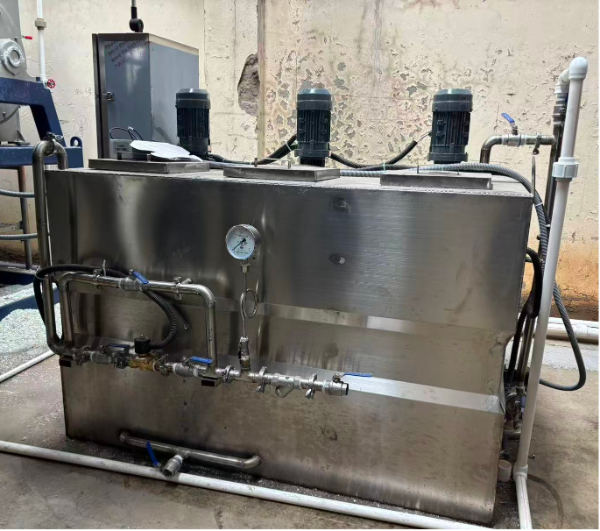
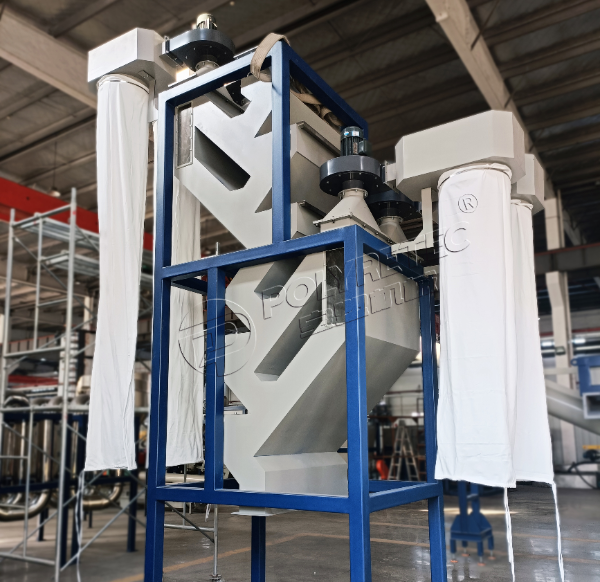
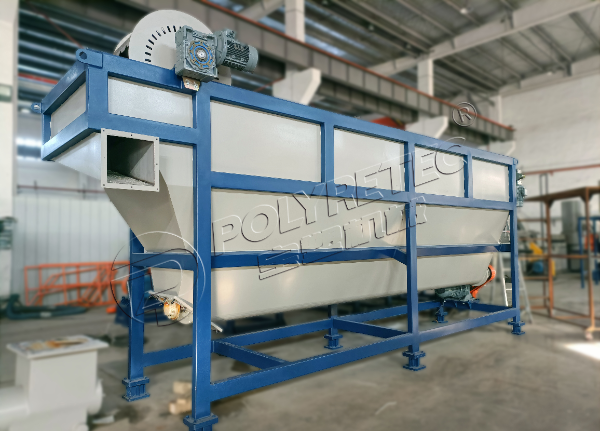
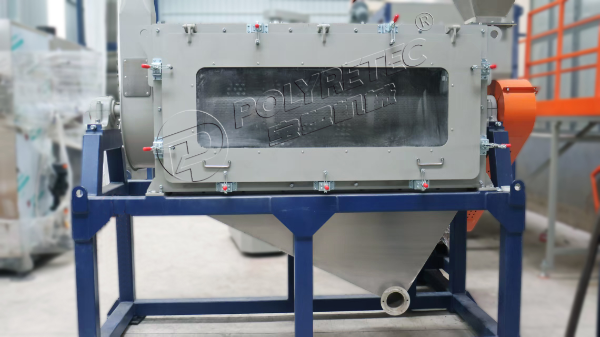
Bumper bulk shredding → crushing (12-25 mm flakes) → Friction Paint-Removal Machine (Turbo washer main unit) → sink�float separation rinsing tank → high�speed dewatering machine → air�separation for paint powder removal, to obtain well�cleaned PP flakes.
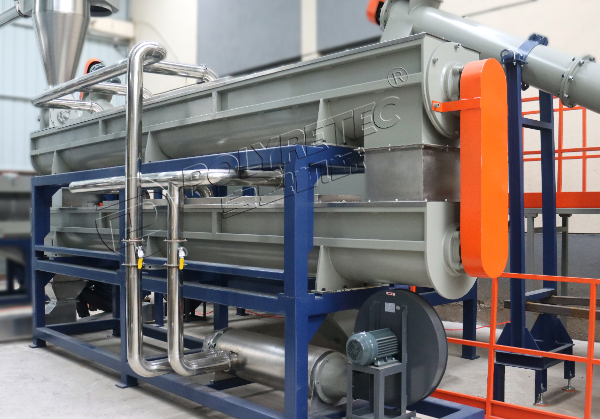
Core Equipment: Friction Paint-Removal Main Host
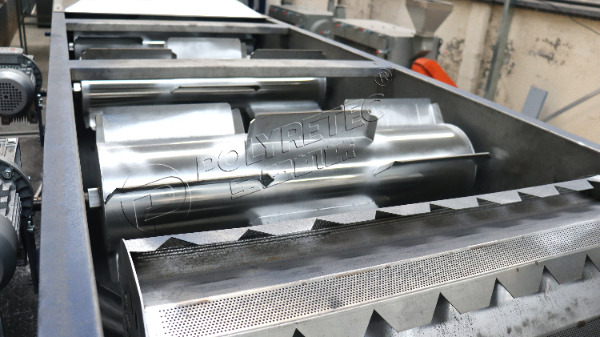
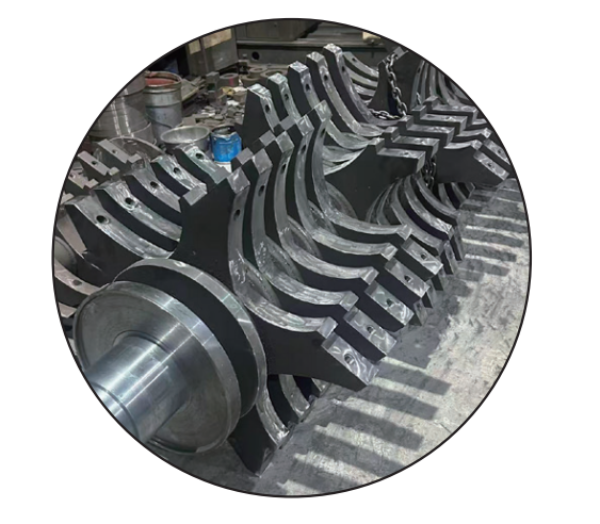
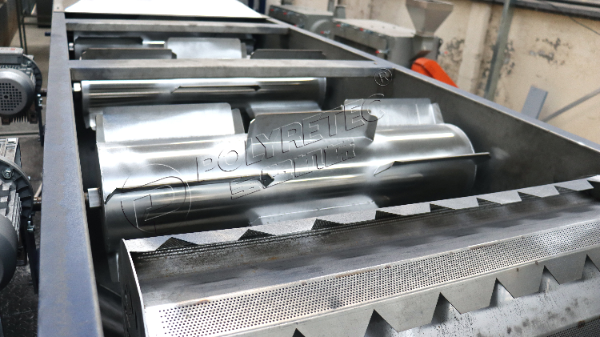
Working Principle: High-speed blades drive PP bumper flakes to collide and rub violently against one another. Heat generated by friction, together with small-volume alkaline water and grinding media, fatigues and cracks the paint coating so it peels off from the PP substrate. Paint residues turn into fine powder and are separated and discharged in subsequent rinsing and air-separation procedures. It is mainly a physical process assisted by a small amount of additives and will not corrode the PP substrate.
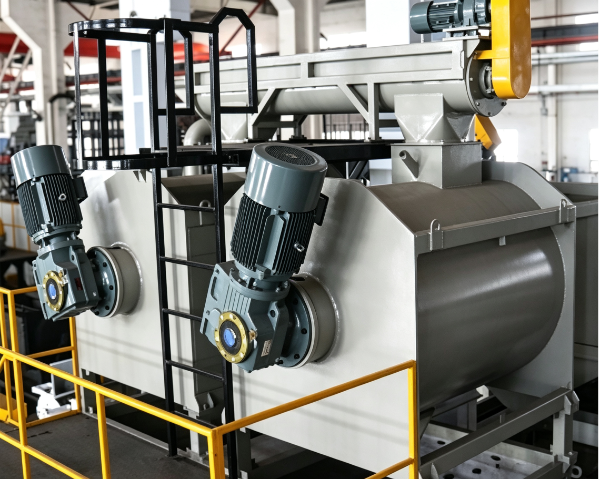
1. Structure: Horizontal cylinder, wear-resistant alloy blades, high-torque reducer, heating-insulated interlayer, water & chemical dosing port, discharge gate, and wear-resistant inner liners.
2. Reference Key Parameters - Single-unit capacity: 300-1200 kg/h - Rotation speed: 450-750 rpm - Working temperature: 60-85 ℃ (self-generated frictional heat; auxiliary coil heating available) - Paint-removal rate: 85-95 % (subject to aging condition of original bumper paint)
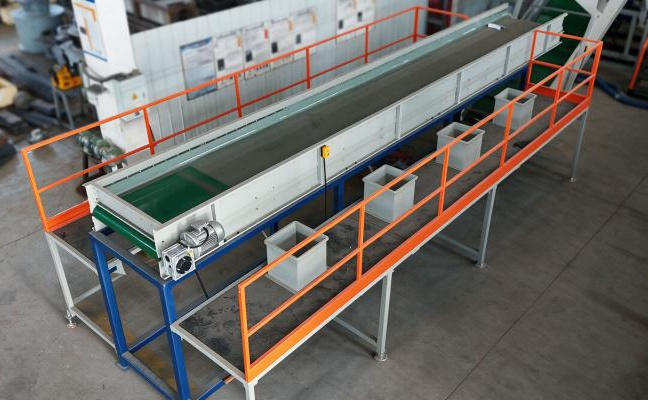
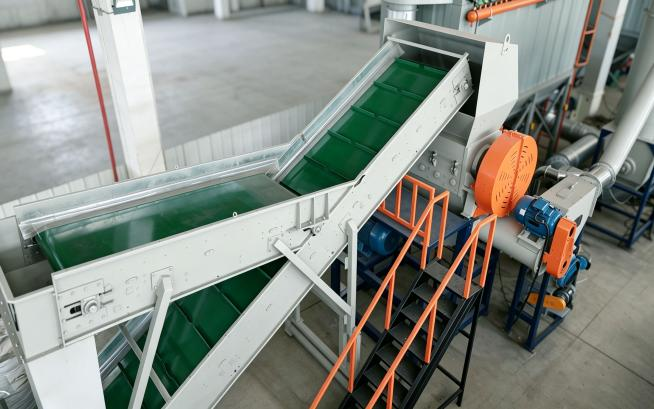
3. Full-line supporting equipment Shredder → crusher → friction paint-removal host → rinsing water tank → screw elevator → high-speed centrifugal dewaterer → air classifier for paint powder removal.
✅ Advantages
1. Suitable for large-volume scrap bumper recycling. Moderate investment cost; widely used by domestic and overseas recycling factories.
2. Minimal damage to PP substrate; output flakes can go directly to pelletizing.
3. Compatible with mixed scraps such as EV shells and motorcycle plastic parts.
4. Spare parts including blades and liners are readily available domestically for convenient maintenance.