Spin finish under perfect control.
PET fibre-to-fibre recycling
as a fine art.
Ready for respinning. The 100% rPET pellets produced by the PolyReTec
FibrePro:IV have it all:
high colour fidelity and the excellent mechanical properties needed for further processing into
ultra-fine, 100% recycled PET fibres with a titer of 2 dtex. Suitable for filament, staple and BCF fibres.
As a result of its efficient cleaning and recovery performance, the new PolyReTec FibrePro:IV is also the first choice for especially challenging input materials such as PET fibres that are heavily contaminated with spin finish and have high levels of moisture.
Unique combination of technologies:
PolyRetec Pelletizing system & IV Uptimiser
This is made possible by combining the pelletizing machine, which has proven itself
thousands of times over, with innovative IV Uptimiser technology. While the
PolyRetec prepares the material for extrusion using its Preconditioning Unit and Agglomerating system to ensure perfect homogenisation, pre-drying,
removal of volatile components, and subsequent gentle PET melting, the
new IV Uptimiser ensures repolymerisation, IV lift and efficiently cleans
the fibres of finishing additives.

tailored to the requirements of the fibre industry
• efficient removal of spin finish and additives
(spinning oils, texturiser oils, etc.)
• optimises and increases intrinsic viscosity (IV value)
to the required level during the melt phase
• repolymerisation
The Solid-State Polycondensation (SSP)of PET (Polyethylene Terephthalate) fibers is a process that increases the molecular weight (intrinsic viscosity, IV value) of PET through a solid-state polycondensation reaction. It is widely used in the production of high-strength industrial fibers, engineering plastics, and other high-performance materials. The following is a detailed analysis of this process:
1. Principle of Solid-State Polycondensation Process Under solid-state conditions (temperature below the melting point of PET, typically 230-250°C), the PET molecular chains are extended through a polycondensation reaction, removing small molecule by-products (such as water and acetaldehyde), thereby increasing its intrinsic viscosity (IV value). Compared to melt polycondensation, SSP can avoid degradation caused by high-temperature melting and is more suitable for producing high-viscosity PET.
2. Process Flow
(1) Pretreatment
Drying: Dry PET flakes (or pellets) to a moisture content of less than 50 ppm to prevent hydrolysis-induced chain scission at high temperatures.- Crystallization: Pre-crystallization at 150-180°C to improve the heat resistance of slices and prevent sticking during subsequent high-temperature processing.
(2) Solid-State Polycondensation
Reaction Conditions: Temperature 230-250°C, inert gas (N₂) or vacuum environment, reaction time 10-24 hours.
Polycondensation Mechanism: Esterification reaction between terminal carboxyl groups (-COOH) and terminal hydroxyl groups (-OH), releasing water molecules; simultaneously, transesterification reactions promote molecular chain growth.#### (3) Post-processing
Cooling: Slow cooling under inert gas protection to prevent oxidative degradation.
Storage: Sealed and moisture-proof storage to maintain polymer molecular weight stability.

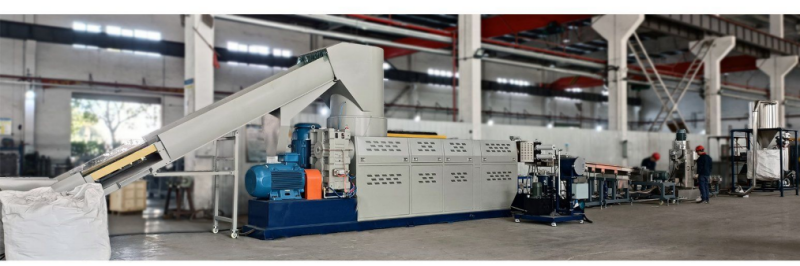
Conveyor belt, Shredder ,agglomerator/ compactor, extruder, Candle-Type High Precision Filtration System ,pelletizing unit, water cooling unit, drying unit, storage silo.
| Unit no. | Items | |
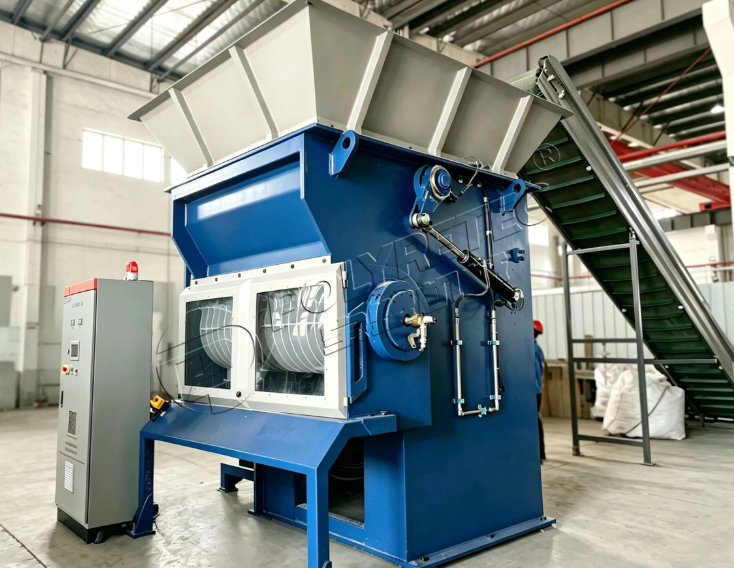
| 1 | Shredder system :This shredder system serves as the front pre-treatment core unit of PET textile recycling pelletizing line. It is specially designed for polyester waste cloth, PET staple fiber, textile scraps, non-woven fabric and waste polyester garments
|
|
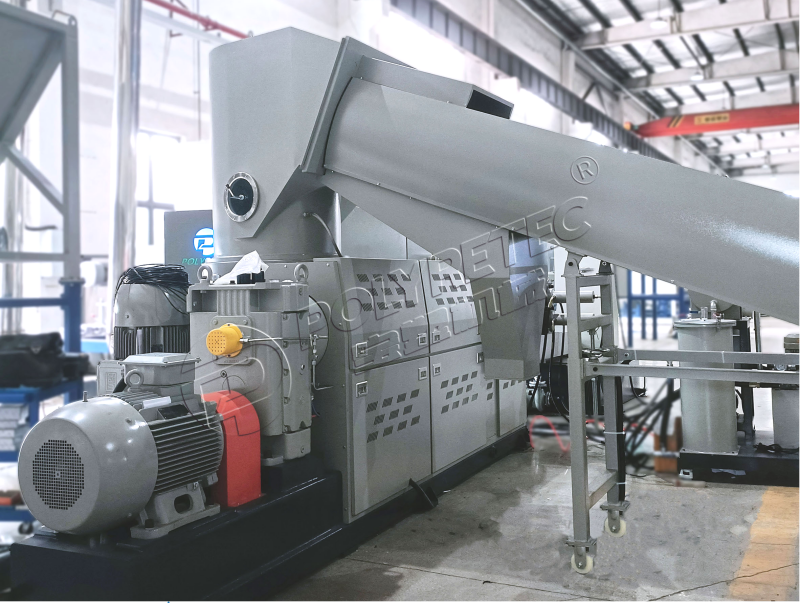
| 2 | GGT1000 Compactor dryer1. The rotary blades at the bottom of the compactor and fixed blades on the wall cut plastic material into small flakes,Friction heat dries and pr-heats the flakes and makes them shrink .
2. This combined process of cutting drying and compacting enable stable and effective feeding for small bulk density plastics . 3. Inverter for compactor to adjust rotary speed of compactor ,meanwhile saves energy 10-15%.
|
|
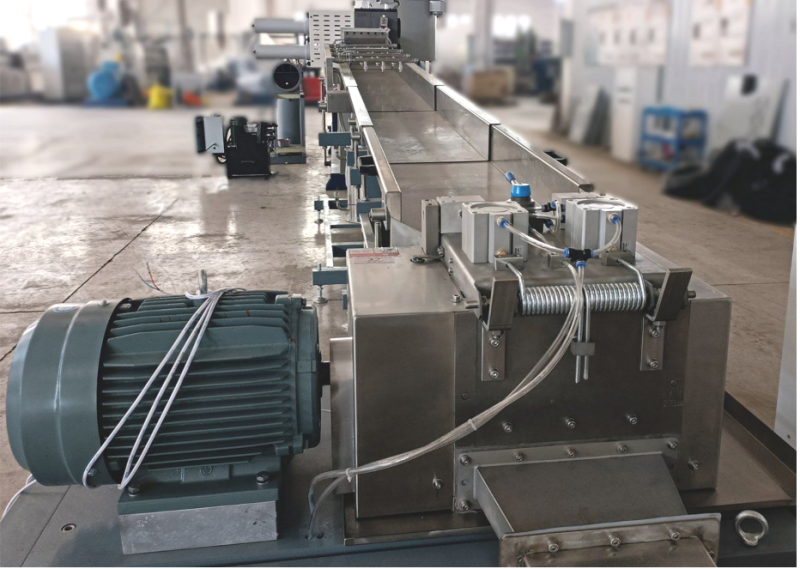
| 3 | PTC single screw extruder with water cooling barrel:This single screw extruder equipped with water cooling barrel is specially designed for recycling and pelletizing of waste PET fiber. The barrel adopts circulating water cooling jacket combined with electric heating for precise temperature control, to avoid thermal degradation and IV loss caused by excessive shear heat of PET.
|
|
| 3.1 |
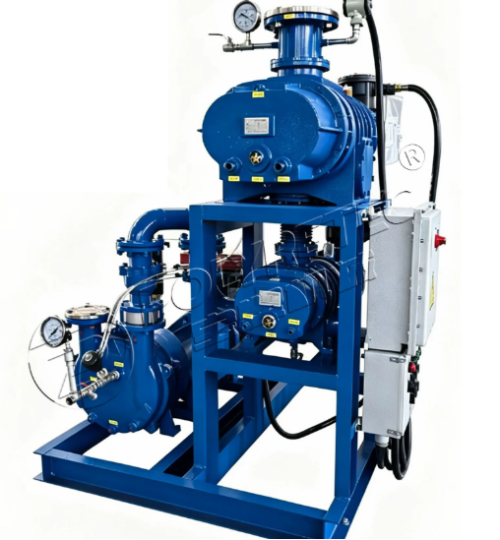
Power Degassing unit with Roots Pump - Two-Stage Liquid Ring Vacuum Pump Unit Vacuum system for auto feeding: filter protects pump by removing dust, moisture and oil mist. Fore pump creates pre-vacuum, then Roots booster pump reaches high vacuum for powder & pellet conveying.
|
|
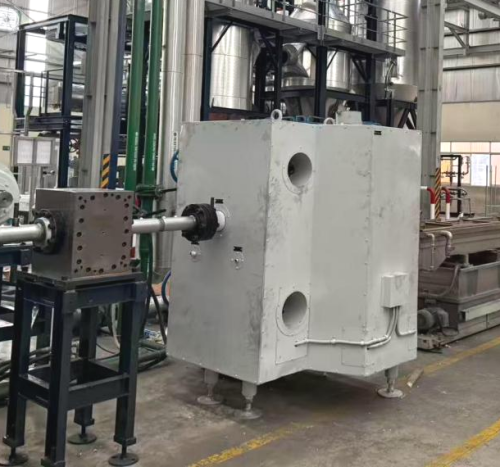
| 4 | Candle-Type High Precision Filtration SystemCandle type high precision melt filter for PE compounding pelletizing line, sintered metal candle elements, precision 5~100 micron, online backwash, remove gel and black specks for high-quality plastic pellets.
|
|
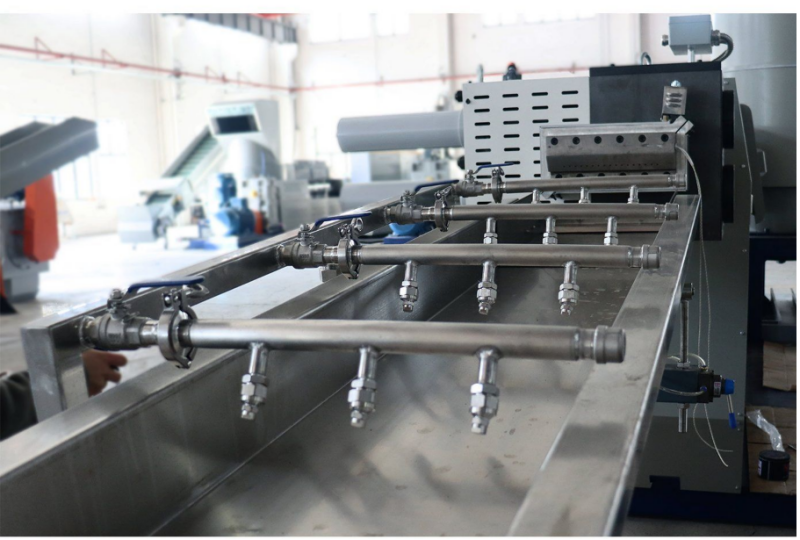
| 5 | Water-flush Pelletizing system:Water-flush pelletizing system for PET waste fabric & fiber pelletizing. Water automatically pulls strands, no manual traction. Reduce waste when screen changing, match with single screw extruder and candle filter.
|
|
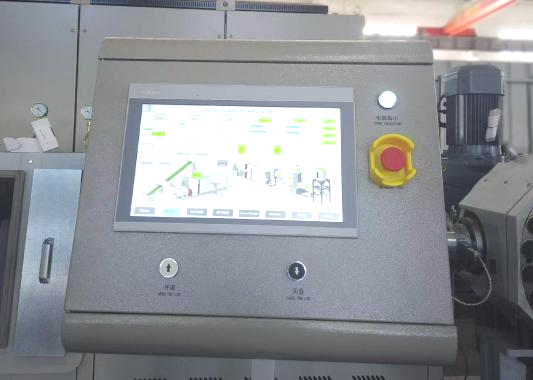
| 6 | Electric control cabinet with PLC controller
|
SMART intelligent control:
HMI PLC control: ergonomic touch screen, easy operation, high stability.
Recipe memory
Remote diagnosis and data transmission
High safety protection: to protect personnel safety and equipment safety
Emergency stop protection (equipment stop in emergency situations)
limit switch
Protect the shell
High-speed transmission parts warning reminder (yellow paint, sign)
04 — Technical characteristics
|
Model |
Output (kg/h) |
Screw diameter (mm) |
Screw speed (rpm) |
L/D |
| PTC120 |
300~400 |
120 |
Adjustable |
25-35 |
| PTC150 |
600-700 |
150 |
Adjustable |
25-35 |
| PTC185 |
1000 |
185 |
Adjustable |
25-35 |